


Sciatica: Causes, Diagnosis & Management
Have you ever experienced a sharp, electric shock-like pain that starts in your lower back and travels down your leg? Does prolonged sitting, coughing, or bending make the pain worse?
These are classic symptoms of Sciatica.
Sciatica is one of the most common reasons people seek medical attention for leg pain. It is not a disease itself, but rather a symptom caused by irritation or compression of the sciatic nerve, the largest nerve in the human body.
The good news is that most people recover without surgery when treated appropriately.
What Is the Sciatic Nerve?
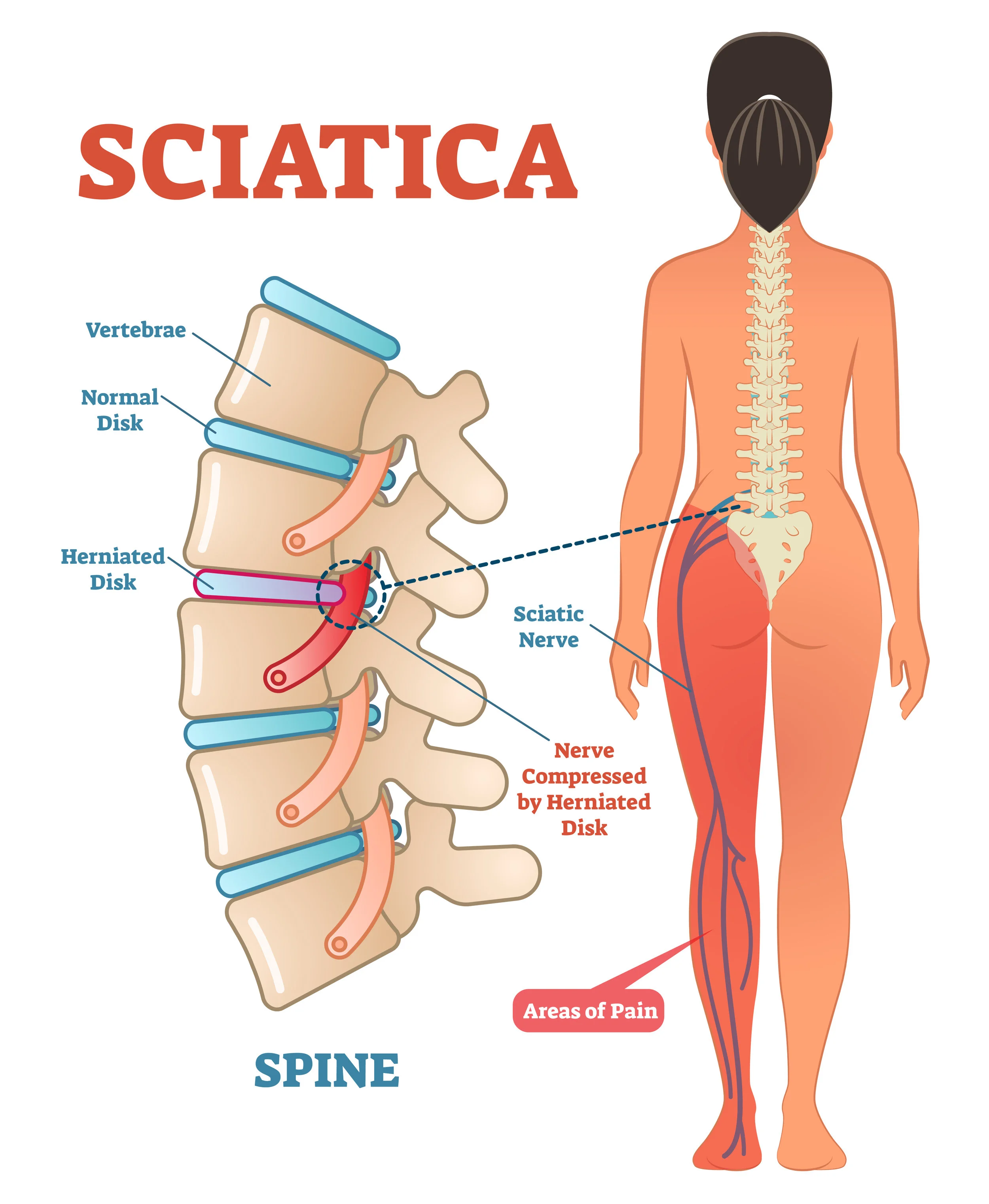
The sciatic nerve is formed by nerve roots arising from the lower spine (typically L4 to S3). It travels through the buttock, down the back of the thigh, and branches into the leg and foot.
Because it is the longest and thickest nerve in the body, irritation at the spine can cause symptoms throughout the lower limb.
What Is Sciatica?
Sciatica refers to pain radiating along the path of the sciatic nerve.
Unlike ordinary back pain, sciatica usually affects one leg and often extends below the knee.
The pain may range from mild discomfort to severe burning or electric shock-like sensations.
Common Causes of Sciatica
Several conditions can compress or irritate the sciatic nerve.
| Cause | How It Causes Sciatica |
|---|---|
| Herniated (Slip) Disc | Compresses the nerve root |
| Lumbar Spinal Stenosis | Narrows the spinal canal |
| Degenerative Disc Disease | Alters spinal mechanics and irritates nerves |
| Spondylolisthesis | Vertebra slips forward, compressing nerves |
| Bone Spurs | Narrow the nerve exit channels |
| Trauma | Direct injury to the spine or pelvis |
| Tumors or Infections (Rare) | Compress nerve structures |
A lumbar disc herniation remains the most common cause, particularly in younger and middle-aged adults.
Risk Factors
Your risk of developing sciatica increases if you:
- Are between 30 and 60 years of age
- Lift heavy objects frequently
- Sit for prolonged periods
- Have obesity
- Smoke
- Have diabetes
- Perform repetitive bending or twisting
- Have weak core muscles
- Lead a physically inactive lifestyle
Common Symptoms
Sciatica typically affects one side of the body.
Patients may experience:
- Sharp shooting pain from the lower back to the leg
- Burning sensation
- Electric shock-like pain
- Buttock pain
- Pain extending below the knee
- Tingling
- Numbness
- Muscle weakness
- Pain while sitting
- Pain aggravated by coughing or sneezing
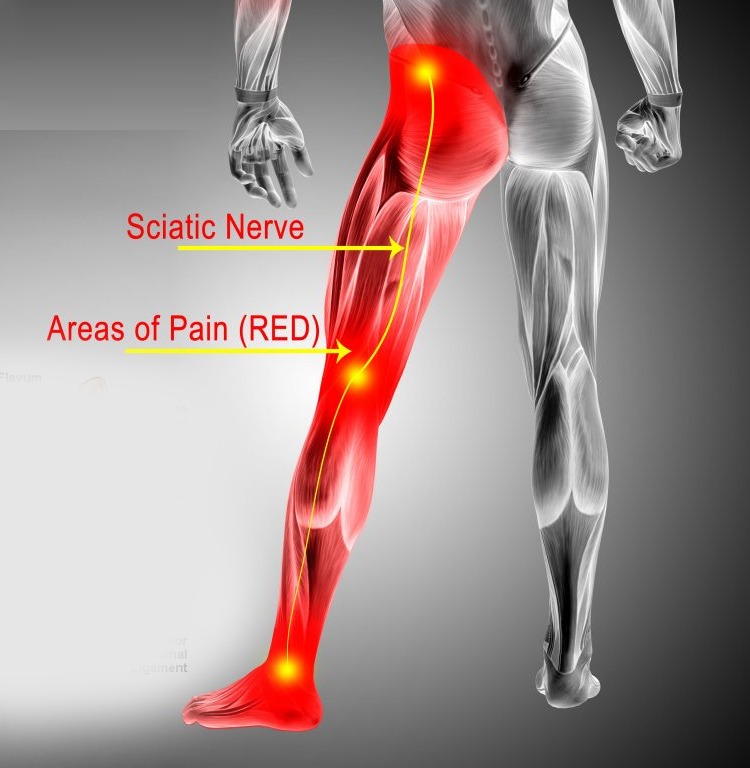
Typical Pain Pattern
Lower Back
     │
     ▼
 Buttock
     │
     ▼
 Back of Thigh
     │
     ▼
 Calf
     │
     ▼
 Foot
Pain may follow this pathway depending on the affected nerve root.
Sciatica vs Ordinary Back Pain
| Feature | Sciatica | Mechanical Back Pain |
|---|---|---|
| Pain Radiates Below Knee | Usually | Rarely |
| Tingling or Numbness | Common | Uncommon |
| Muscle Weakness | May occur | Rare |
| Nerve Compression | Present | Usually absent |
| Leg Pain Greater Than Back Pain | Often | No |
Red Flag Symptoms
Seek immediate medical attention if you develop:
- Loss of bladder control
- Loss of bowel control
- Numbness around the groin or saddle area
- Rapidly worsening leg weakness
- Difficulty walking because of weakness
- Severe back pain after major trauma
- Fever with back pain
- Unexplained weight loss and persistent pain
These symptoms may indicate a serious spinal condition that requires urgent evaluation.
How Is Sciatica Diagnosed?
Diagnosis begins with a thorough medical history and physical examination.
Your doctor may ask:
- Where does the pain travel?
- When did the symptoms begin?
- What activities worsen the pain?
- Is there numbness or weakness?
Physical Examination
The examination may include:
- Straight Leg Raise (SLR) test
- Muscle strength assessment
- Reflex testing
- Sensory examination
- Walking assessment
- Spine mobility evaluation
Imaging
| Investigation | Purpose |
|---|---|
| X-ray | Assess spinal alignment and bones |
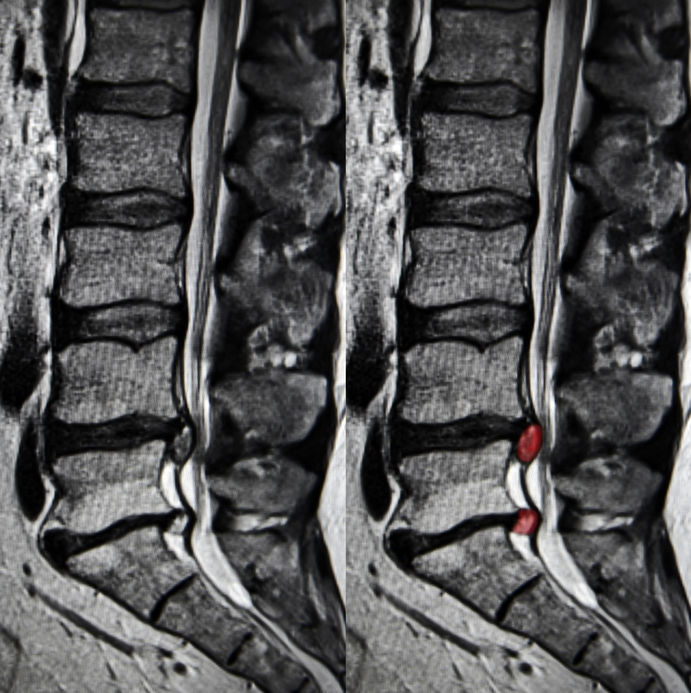
| MRI | Best test for nerve compression and disc herniation |
| CT Scan | Selected patients |
| Nerve Conduction Studies | Occasionally useful |
MRI is the preferred imaging study when symptoms are severe, persistent, or associated with neurological deficits.
Treatment Options
Most patients improve with non-surgical treatment.
Management depends on:
- Cause of nerve compression
- Severity of symptoms
- Duration of pain
- Presence of neurological deficits
- Daily activity limitations
Non-Surgical Treatment
Treatment may include:
- Activity modification
- Pain-relieving medications
- Anti-inflammatory medicines
- Physiotherapy
- Core strengthening exercises
- Posture correction
- Weight management
Prolonged complete bed rest is generally discouraged because early, gradual movement often promotes recovery.
Physiotherapy
A rehabilitation program aims to:
- Reduce nerve irritation
- Improve flexibility
- Strengthen core muscles
- Improve posture
- Restore normal movement
- Prevent recurrence
Epidural Steroid Injection
For selected patients with persistent severe nerve pain, an epidural steroid injection may reduce inflammation around the affected nerve root and provide symptom relief.
The decision should be individualized after specialist evaluation.
When Is Surgery Needed?
Fortunately, most people with sciatica do not require surgery.
Surgery may be recommended if:
- Progressive muscle weakness develops
- Pain persists despite adequate conservative treatment
- Significant nerve compression is demonstrated on imaging
- Daily activities remain severely limited
- Bladder or bowel symptoms occur
- Cauda equina syndrome is suspected
Surgical Options
Depending on the underlying cause, surgery may include:
| Procedure | Purpose |
|---|---|
| Microdiscectomy | Remove herniated disc fragment |
| Endoscopic Discectomy | Minimally invasive disc removal |
| Laminectomy | Relieve pressure from spinal stenosis |
| Spinal Fusion | Stabilize selected spinal disorders |
Your spine surgeon will recommend the most appropriate procedure based on your diagnosis.
Exercises That May Help
Exercises should only be started after evaluation by a healthcare professional.
Commonly recommended exercises include:
Walking
Short, frequent walks are often beneficial during recovery.
Pelvic Tilt
Helps strengthen the muscles supporting the lower back.
Knee-to-Chest Stretch
May improve lower back flexibility in selected patients.
McKenzie Extension Exercises
Can be helpful for certain patients with lumbar disc-related sciatica when prescribed by a physiotherapist.
Important
Stop exercising and seek medical advice if your leg pain, numbness, or weakness worsens during exercise.
Common Mistakes
Avoid these common errors:
- Staying in bed for several days
- Ignoring persistent leg weakness
- Continuing heavy lifting during recovery
- Self-medicating for months without evaluation
- Returning to sports too early
- Stopping physiotherapy once pain decreases
Frequently Asked Questions
Is sciatica a disease?
No.
Sciatica is a symptom caused by irritation or compression of the sciatic nerve.
Can sciatica heal without surgery?
Yes.
Most patients recover with medications, physiotherapy, activity modification, and time.
Is walking good for sciatica?
Walking is generally encouraged if it does not significantly worsen symptoms. Your healthcare provider can advise the appropriate activity level based on your condition.
Can sciatica affect both legs?
Sciatica usually affects one leg, although bilateral symptoms may occur in certain spinal conditions and warrant prompt medical evaluation.
Can sciatica come back?
Yes.
Recurrence is possible, particularly if underlying risk factors such as poor posture, obesity, smoking, or weak core muscles are not addressed.
Tips to Prevent Sciatica
Healthy habits can reduce your risk of future episodes.
- Maintain a healthy body weight.
- Exercise regularly.
- Strengthen your core muscles.
- Avoid prolonged sitting without breaks.
- Lift heavy objects correctly.
- Use proper posture while working.
- Stop smoking.
- Stay physically active.
Key Takeaways
Sciatica is a symptom—not a diagnosis—and identifying its underlying cause is the key to successful treatment.
- A herniated lumbar disc is the most common cause of sciatica.
- Pain typically radiates from the lower back into one leg.
- MRI is the preferred imaging test when symptoms are severe or persistent.
- Most patients improve with conservative treatment.
- Surgery is reserved for selected patients with persistent pain or neurological deficits.
Book an Appointment
Persistent leg pain, numbness, or weakness should never be ignored, especially if it interferes with walking, work, or daily activities.
At Spica Hospitals, we provide comprehensive evaluation and treatment for sciatica, slipped discs, spinal stenosis, neck pain, back pain, and other spine disorders using evidence-based care, advanced imaging, personalized rehabilitation, and minimally invasive surgical techniques when required.