
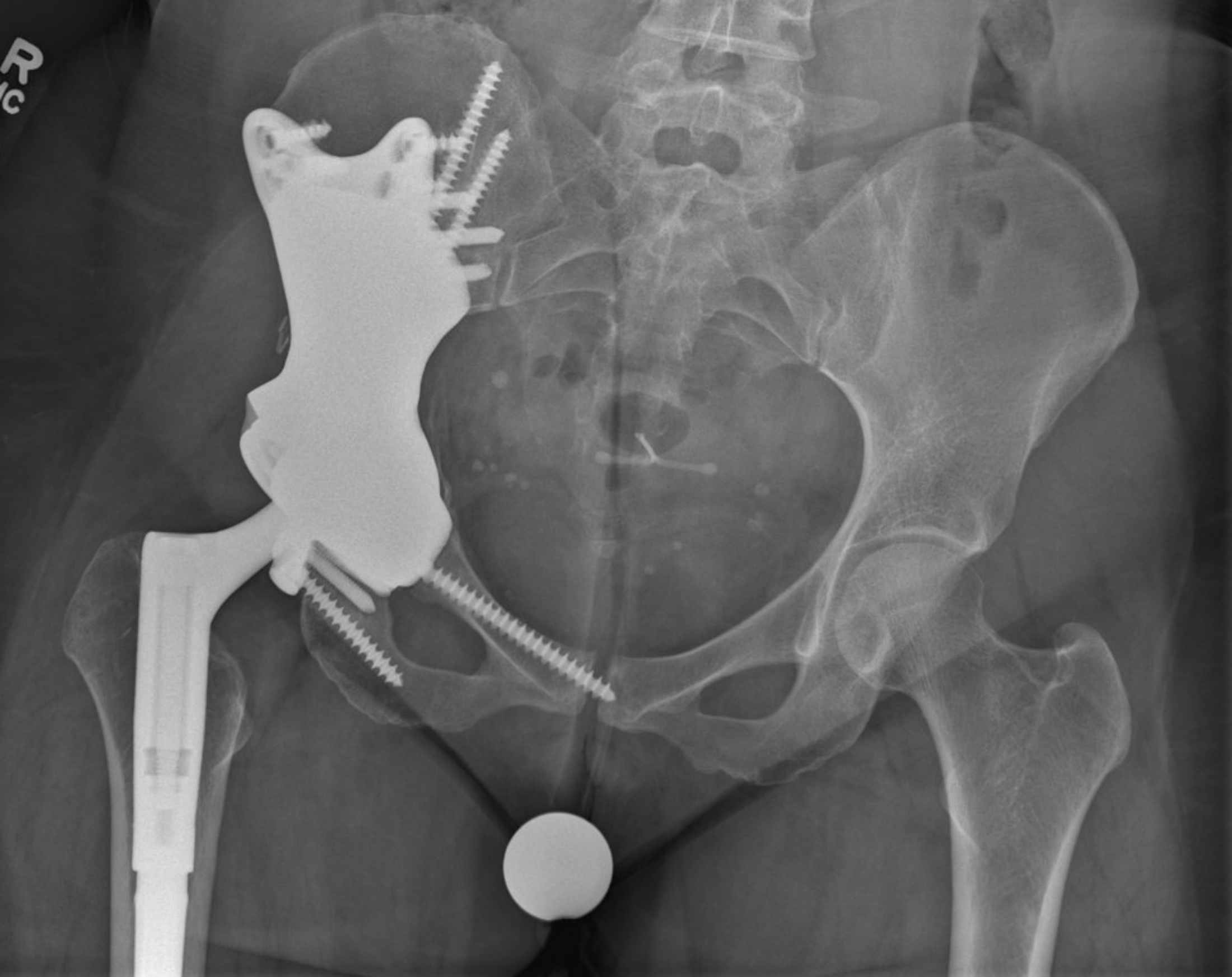
Limb Salvage Surgery in Orthopaedic Oncology
Primary bone tumors—such as Osteosarcoma, Ewing Sarcoma, and Chondrosarcoma—were historically treated with amputation. Over the past two decades, advances in bio-engineering and surgical techniques have made limb salvage the standard of care for over 95% of patients.
What is Limb Salvage?
Limb salvage surgery involves removing the bone tumor with a wide margin of healthy tissue while preserving the leg or arm. The resulting skeletal defect is then reconstructed to restore weight-bearing strength and motion.
3D-Printed Titanium Megaprosthetics
When a tumor is located near a joint (like the knee or hip), the joint must often be resected. We collaborate with biomedical designers to print custom titanium joints that match the patient's pre-operative CT scans. These implants feature a porous micro-scaffold that allows native bone cells to grow directly into the metal, creating a permanent biological bond over time.
Key Treatment Phases:
- Neoadjuvant Chemotherapy: Systemic treatment to shrink the tumor and clear microscopic cancer cells before surgery.
- CAD margin planning: Precise margins are drafted on 3D computer models of the patient's bone.
- Wide Resection: Complete tumor removal guided by specialized surgical cutting blocks.
- Mega-Prosthetic Reconstruction: Modular joint fit and muscle/tendon repair.
- Gait Rehabilitation: Targeted physical therapy in our Gait Lab to restore independent walking.