

Common Sports Injuries and Prevention Tips
Sports and regular physical activity are among the best ways to maintain a healthy body. However, whether you're a professional athlete, a weekend cricket player, a gym enthusiast, or someone who enjoys daily jogging, injuries can happen.
Most sports injuries are preventable. Understanding how they occur—and recognizing early warning signs—can help you recover faster and reduce the risk of long-term complications.
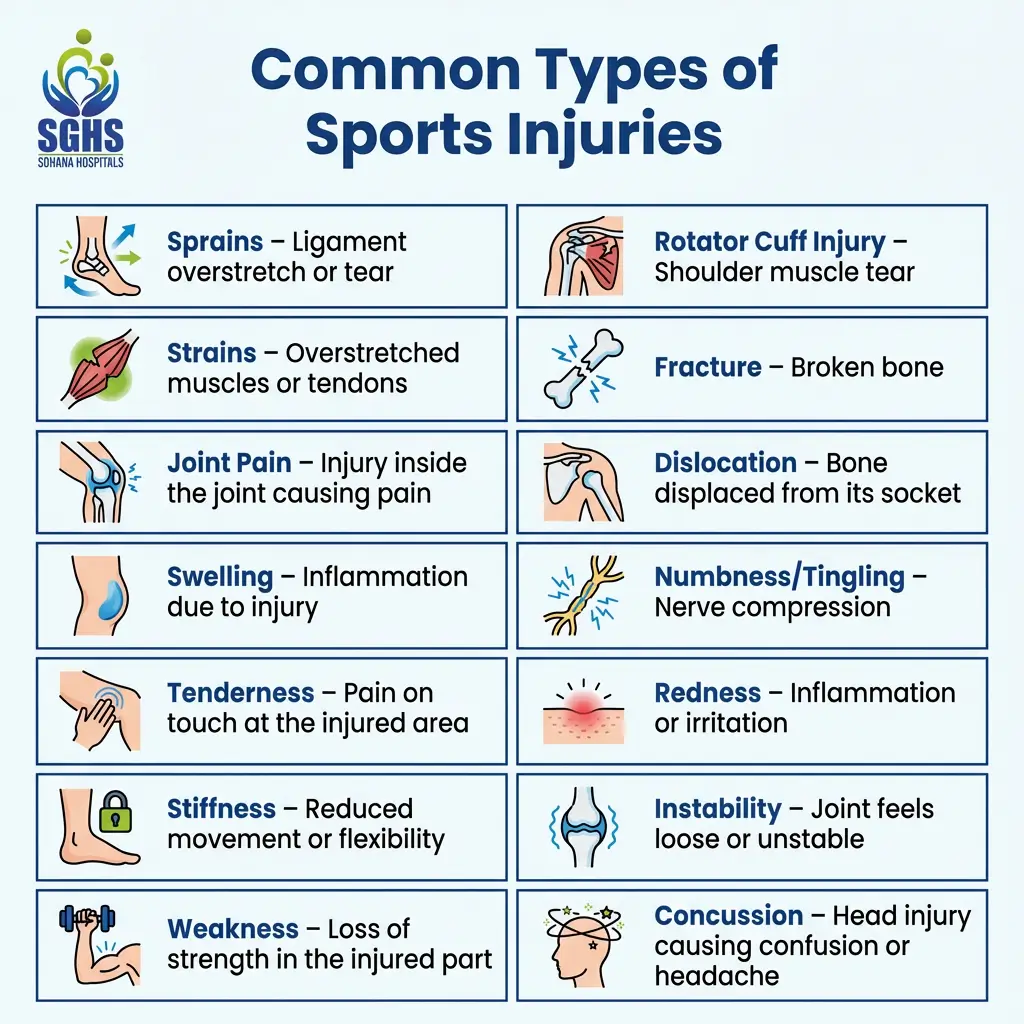
Why Do Sports Injuries Happen?
Sports injuries usually occur because of one or more of the following reasons:
- Inadequate warm-up
- Poor training technique
- Sudden increase in activity
- Muscle weakness
- Poor flexibility
- Incorrect footwear
- Overtraining
- Direct impact during sports
- Fatigue
- Returning to sports before complete recovery
Who Is at Risk?
Sports injuries can affect anyone, including:
- Professional athletes
- School and college students
- Recreational players
- Gym-goers
- Runners
- Cyclists
- Fitness enthusiasts
- Children participating in sports
Most Common Sports Injuries
1. Ankle Sprain
An ankle sprain occurs when the ligaments supporting the ankle are stretched or torn.
Common Symptoms
- Sudden pain
- Swelling
- Difficulty walking
- Bruising
- Tenderness
Common Sports
- Football
- Basketball
- Volleyball
- Running
- Badminton
2. ACL Tear
One of the most serious knee injuries in sports.
Usually caused by:
- Sudden twisting
- Landing awkwardly
- Rapid change in direction
Symptoms
- Loud popping sound
- Immediate swelling
- Knee instability
- Difficulty walking
3. Meniscus Tear
The meniscus acts as a shock absorber inside the knee.
It may tear during twisting movements.
Symptoms
- Knee pain
- Locking
- Clicking
- Swelling
- Difficulty squatting
4. Muscle Strain
Muscles can become overstretched or partially torn.
Commonly affected muscles include:
- Hamstrings
- Quadriceps
- Calf muscles
- Groin muscles
Symptoms include:
- Sudden pain
- Muscle tightness
- Difficulty running
- Bruising
5. Tennis Elbow
Despite its name, tennis elbow affects many non-athletes.
It commonly develops due to repetitive gripping activities.
Typical symptoms include:
- Pain on the outside of the elbow
- Weak grip strength
- Pain while lifting objects
6. Shoulder Injuries
Shoulder injuries commonly affect:
- Cricket bowlers
- Swimmers
- Volleyball players
- Weightlifters
- Tennis players
Examples include:
- Rotator cuff injuries
- Shoulder instability
- Shoulder dislocation
7. Shin Splints
A common overuse injury in runners and military recruits.
Symptoms include:
- Pain along the shin bone
- Tenderness
- Pain during running
- Pain after exercise
8. Stress Fractures
Stress fractures are tiny cracks in bone caused by repetitive loading rather than a single injury.
Common sites include:
- Foot
- Tibia
- Hip
- Pelvis
Injury Comparison
| Injury | Sudden or Gradual? | Common Body Part |
|---|---|---|
| ACL Tear | Sudden | Knee |
| Meniscus Tear | Sudden | Knee |
| Ankle Sprain | Sudden | Ankle |
| Muscle Strain | Sudden | Muscle |
| Tennis Elbow | Gradual | Elbow |
| Shin Splints | Gradual | Leg |
| Stress Fracture | Gradual | Bone |
Warning Signs You Should Never Ignore
Stop exercising and seek medical evaluation if you experience:
- Severe swelling
- Joint deformity
- Inability to bear weight
- Persistent pain
- Recurrent instability
- Locking of a joint
- Numbness
- Loss of strength
- Pain lasting more than one week despite rest
Ignoring these symptoms may worsen the injury.
First Aid: The PRICE Principle
For many acute sports injuries, the PRICE principle is commonly recommended during the initial phase.
| Step | Meaning |
|---|---|
| P | Protect the injured area |
| R | Rest from aggravating activities |
| I | Ice application for 15–20 minutes at intervals |
| C | Compression using an elastic bandage if appropriate |
| E | Elevation above heart level whenever possible |
These measures may help reduce pain and swelling during the early stages after an injury.
Prevention Starts Before the Game
Many injuries can be prevented with simple habits.
Warm Up Properly
Spend at least 10–15 minutes preparing your body.
Include:
- Light jogging
- Dynamic stretching
- Mobility exercises
- Sport-specific drills
A proper warm-up improves muscle performance and prepares joints for activity.
Strength Training
Strong muscles help protect joints.
Focus on strengthening:
- Core muscles
- Quadriceps
- Hamstrings
- Gluteal muscles
- Calf muscles
- Shoulder stabilizers
Improve Flexibility
Regular stretching helps maintain joint mobility and reduces muscle tightness.
Stretch after exercise rather than before intense activity.
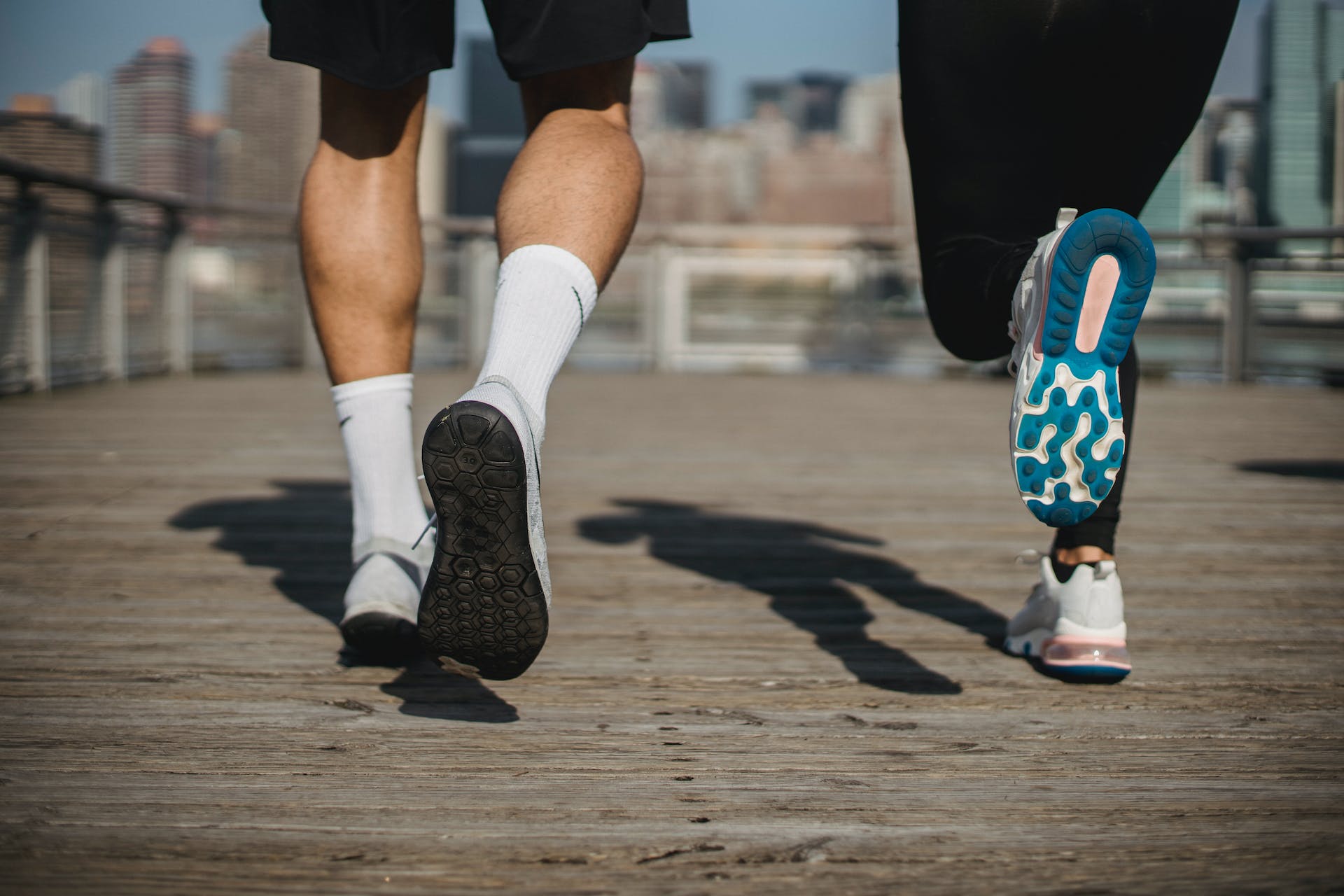
Wear Appropriate Footwear
Different sports require different shoes.
Worn-out or poorly fitted footwear increases the risk of injury.
Replace sports shoes when they lose adequate support.
Avoid Overtraining
Your body needs time to recover.
Warning signs of overtraining include:
- Persistent fatigue
- Decreased performance
- Recurrent injuries
- Muscle soreness lasting several days
Adequate rest is part of effective training.
Stay Hydrated
Even mild dehydration can reduce performance and increase fatigue.
Drink fluids before, during, and after exercise according to your activity level and environmental conditions.
Listen to Your Body
Pain is a warning signal.
Continuing to train through significant pain may convert a minor injury into a major one.
Returning to Sports
Returning too early increases the risk of reinjury.
Before resuming sports, ensure:
- Full range of motion
- Near-normal strength
- Minimal or no swelling
- Pain-free movement
- Medical clearance when appropriate
Recovery should be based on function rather than the calendar alone.
Clinical Insight
Many serious injuries begin as minor aches that are ignored. Early evaluation and appropriate rehabilitation often prevent prolonged recovery and reduce the risk of long-term complications.
Frequently Asked Questions
Which sport has the highest injury risk?
Every sport carries its own injury profile. Contact sports such as football and rugby have a higher risk of traumatic injuries, while running and gym training are more commonly associated with overuse injuries.
Should I apply heat or ice after an injury?
Ice is generally preferred during the first 24–48 hours after an acute injury to help reduce pain and swelling. Heat may be more useful later for muscle stiffness, depending on the condition.
Is it safe to continue playing if the pain is mild?
Persistent pain should not be ignored. Continuing to play despite pain may worsen the injury and delay recovery.
Can children get sports injuries?
Yes.
Children and adolescents can develop sprains, fractures, growth plate injuries, tendon problems, and overuse injuries, especially during periods of rapid growth.
How can I reduce my risk of injury?
The best prevention strategies include:
- Regular strength training
- Proper warm-up
- Correct sports technique
- Appropriate footwear
- Adequate recovery
- Gradual progression of training intensity
Injury Prevention Checklist
Before every training session or match, ask yourself:
- Have I warmed up properly?
- Am I wearing the correct footwear?
- Am I fully recovered from my previous session?
- Do I have any persistent pain?
- Am I well hydrated?
- Am I increasing my training gradually?
If the answer to any of these is No, consider addressing it before participating.
Key Takeaways
The best sports injury is the one that never happens.
- Most sports injuries are preventable with proper preparation.
- Warm-up, strength training, flexibility, and adequate recovery are essential.
- Early diagnosis leads to faster recovery and reduces the risk of long-term complications.
- Never ignore persistent pain or instability after a sports injury.
- Return to sports only after regaining strength, mobility, and function.
Book an Appointment
Whether you're a competitive athlete or someone who enjoys recreational sports, early treatment of sports injuries can help you recover safely and return to activity with confidence.
At Spica Hospitals, we provide expert evaluation and treatment for ligament injuries, tendon disorders, fractures, shoulder injuries, knee injuries, ankle sprains, and sports-related conditions using evidence-based rehabilitation and advanced orthopaedic care.