


Cervical Spondylosis Explained
Do you often wake up with a stiff neck? Does turning your head while driving cause discomfort? Do you experience pain that radiates from your neck into your shoulder or arm?
These symptoms may be caused by Cervical Spondylosis, one of the most common age-related conditions affecting the neck.
The condition develops gradually as the bones, discs, joints, and ligaments of the cervical spine undergo natural wear and tear. While it is common after the age of 40, many people never develop significant symptoms.
The reassuring news is that most patients improve with conservative treatment, including posture correction, physiotherapy, and lifestyle modifications.

What Is Cervical Spondylosis?
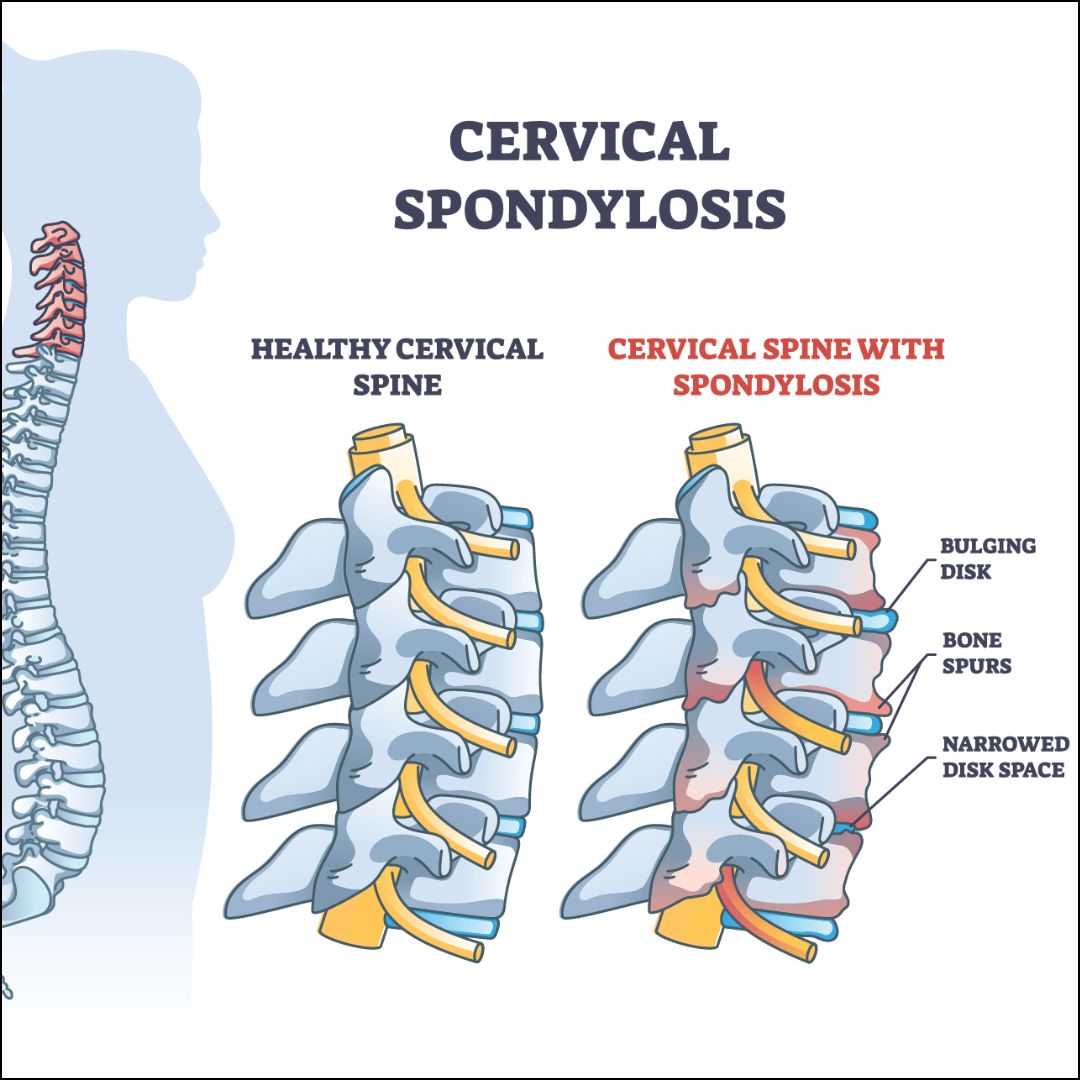
The cervical spine consists of seven vertebrae (C1–C7) that support the head and protect the spinal cord.
Between these vertebrae are intervertebral discs, which act as cushions and allow smooth neck movement.
As we age:
- The discs lose water content.
- Disc height gradually decreases.
- Small bone spurs (osteophytes) may develop.
- Ligaments may become thicker.
- The joints become less flexible.
These age-related changes are collectively known as cervical spondylosis.
What Causes Cervical Spondylosis?
The primary cause is natural ageing, but several factors increase the risk.
Common Risk Factors
| Risk Factor | Effect |
|---|---|
| Increasing age | Most important factor |
| Prolonged computer use | Increases neck strain |
| Poor posture | Accelerates mechanical stress |
| Previous neck injury | May speed up degeneration |
| Smoking | Reduces disc nutrition |
| Heavy manual work | Repetitive stress on the spine |
| Sedentary lifestyle | Weakens supporting muscles |
| Family history | May increase susceptibility |
What Happens Inside the Neck?
Healthy Disc
      │
      ▼
Disc Dehydration
      │
      ▼
Loss of Disc Height
      │
      ▼
Bone Spur Formation
      │
      ▼
Narrowing Around Nerves
      │
      ▼
Pain • Stiffness • Nerve Symptoms
Common Symptoms
Symptoms vary depending on the severity of degeneration.
Many people have cervical spondylosis on X-rays or MRI without experiencing pain.
When symptoms develop, they may include:
- Neck pain
- Neck stiffness
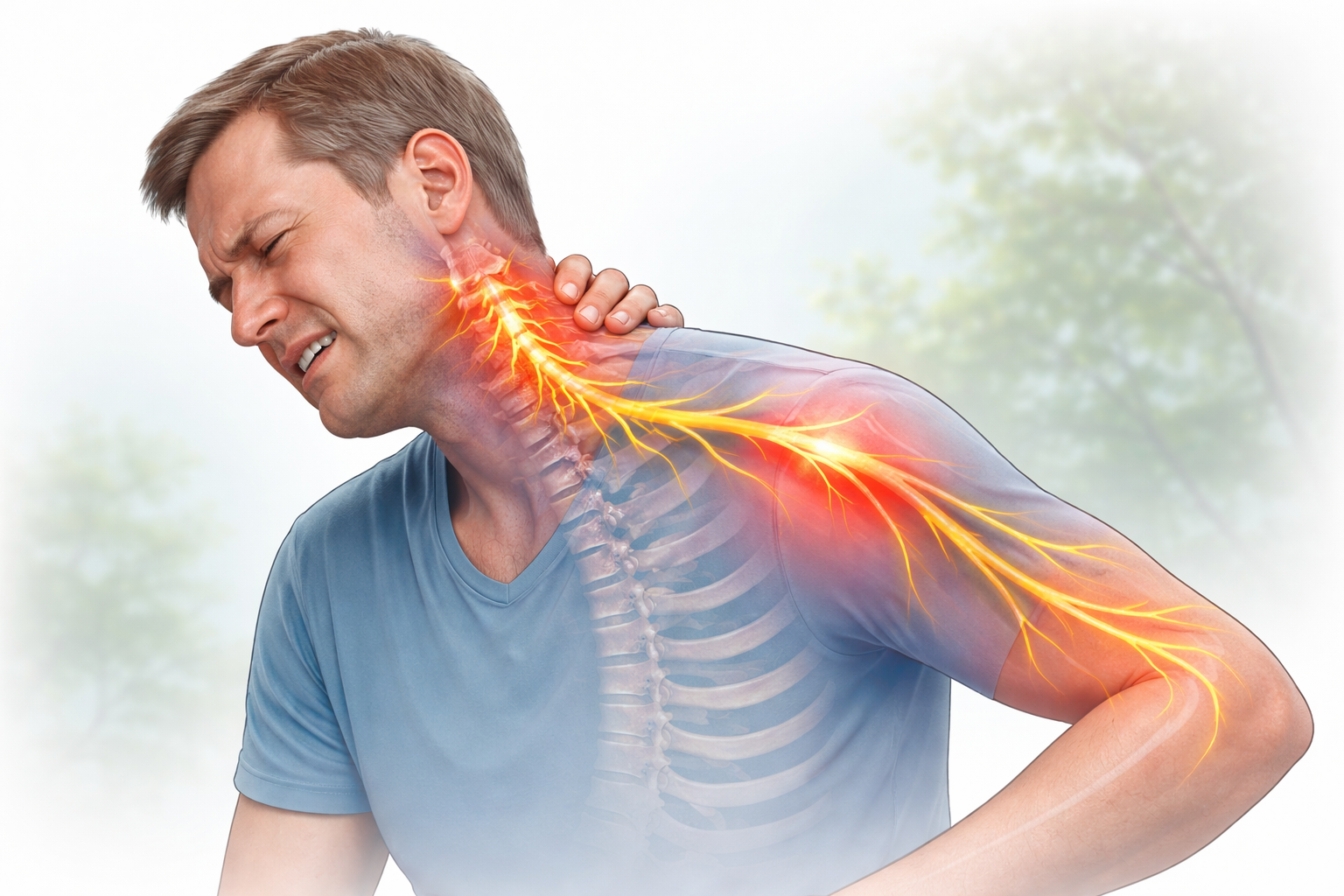
- Pain radiating to the shoulder
- Pain radiating into the arm
- Headaches (often at the back of the head)
- Muscle spasms
- Reduced neck movement
- Shoulder blade discomfort
When Nerves Become Compressed
If a nerve root is compressed (cervical radiculopathy), symptoms may include:
- Arm pain
- Tingling
- Numbness
- Hand weakness
- Reduced grip strength
The symptoms usually affect one arm but can occasionally involve both.
When the Spinal Cord Is Compressed
In advanced cases, cervical spondylosis may compress the spinal cord (cervical myelopathy).
Possible symptoms include:
- Difficulty with balance
- Clumsy hands
- Difficulty buttoning clothes
- Frequent falls
- Weakness in both arms or legs
- Problems with bladder control (rare but serious)
These symptoms require prompt medical evaluation.
Cervical Spondylosis vs Slip Disc
| Feature | Cervical Spondylosis | Cervical Slip Disc |
|---|---|---|
| Cause | Age-related degeneration | Disc herniation |
| Onset | Gradual | Often sudden |
| Neck Stiffness | Common | Less prominent |
| Arm Pain | May occur | Common |
| Bone Spurs | Present | Usually absent |
| Disc Bulge | May be present | Main problem |
Both conditions can produce similar symptoms, and MRI is often helpful in distinguishing between them.
How Is Cervical Spondylosis Diagnosed?
Diagnosis begins with a detailed history and physical examination.
Your doctor may assess:
- Neck movement
- Muscle strength
- Reflexes
- Sensation
- Balance
- Walking pattern
Imaging
| Investigation | Purpose |
|---|---|
| X-ray | Evaluate bones and alignment |
| MRI | Assess discs, nerves, and spinal cord |
| CT Scan | Detailed assessment of bone |
| Nerve Conduction Studies | Selected patients |
MRI is particularly useful if nerve compression or spinal cord involvement is suspected.

Treatment Options
Most patients improve without surgery.
Treatment depends on:
- Severity of symptoms
- Presence of nerve compression
- Spinal cord involvement
- Daily activity limitations
- Imaging findings
Non-SSurgical Treatment
Conservative treatment may include:
- Activity modification
- Pain-relieving medications
- Anti-inflammatory medicines
- Physiotherapy
- Ergonomic correction
- Neck strengthening exercises
- Heat therapy
Most patients experience significant improvement with these measures.
Physiotherapy
Physiotherapy plays a central role in recovery.
The goals include:
- Improving posture
- Restoring neck movement
- Strengthening neck muscles
- Strengthening shoulder muscles
- Improving flexibility
- Reducing muscle spasm
Ergonomic Advice
Simple changes at work can reduce neck strain.
Recommended measures include:
- Keep the monitor at eye level.
- Avoid prolonged looking down at mobile phones.
- Use a supportive chair.
- Take movement breaks every 30–60 minutes.
- Keep shoulders relaxed while typing.
Simple Neck Exercises
Exercises should be performed only after appropriate medical evaluation.
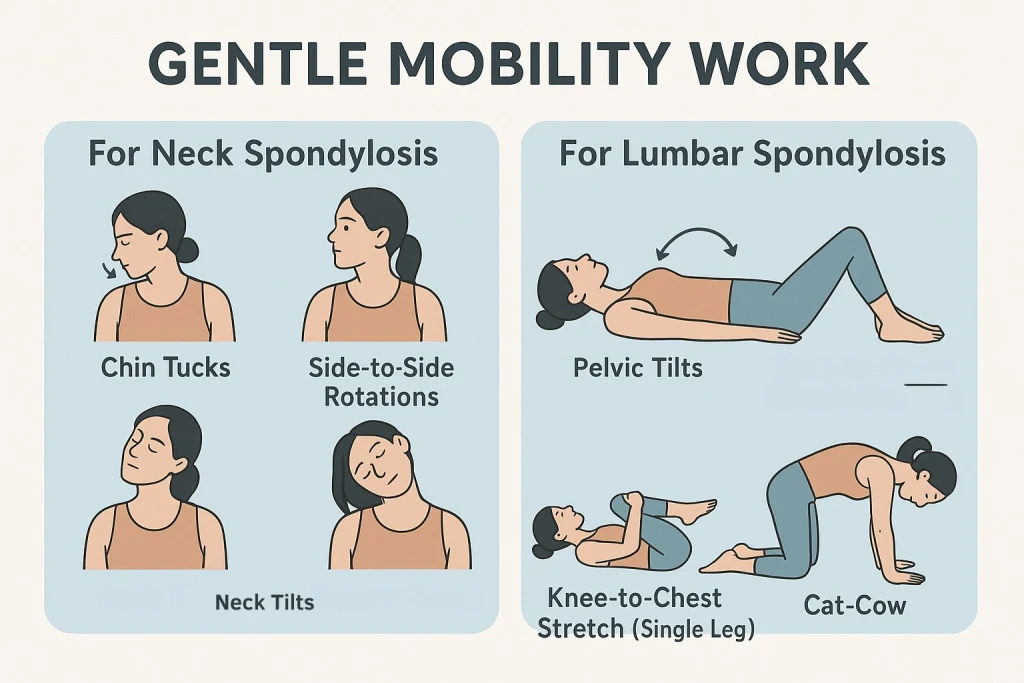
Chin Tucks
Help improve forward head posture.
Neck Rotation
Slowly turn your head from side to side without forcing the movement.
Shoulder Blade Squeezes
Strengthen the muscles supporting the neck.
Neck Side Stretch
Gently stretch each side for 20–30 seconds.
Exercise Tip
Exercises should never increase numbness, arm weakness, or severe pain. If symptoms worsen, stop exercising and seek medical advice.
When Is Surgery Needed?
Surgery is not required for most patients.
It may be considered if:
- Progressive neurological weakness develops
- Persistent arm pain fails to improve with conservative treatment
- Cervical myelopathy is present
- Walking becomes impaired
- Significant spinal cord compression is demonstrated on MRI
Common Surgical Procedures
Depending on the underlying condition, surgery may include:
| Procedure | Purpose |
|---|---|
| ACDF (Anterior Cervical Discectomy and Fusion) | Remove compressed disc and stabilize the spine |
| Cervical Disc Replacement | Preserve motion in selected patients |
| Posterior Cervical Decompression | Relieve pressure on the spinal cord |
| Cervical Laminectomy | Increase space around the spinal cord |
The choice of procedure depends on the patient's symptoms, imaging findings, and overall spinal alignment.
When Should You Seek Immediate Medical Care?
Consult a doctor urgently if you experience:
- Weakness in the arms or legs
- Difficulty walking
- Loss of hand coordination
- Loss of bladder or bowel control
- Severe neck pain after trauma
- Fever associated with neck pain
- Unexplained weight loss
These symptoms may indicate spinal cord compression or another serious condition.
Common Mistakes
Avoid these common errors:
- Ignoring persistent arm numbness
- Looking down at smartphones for prolonged periods
- Using multiple pillows while sleeping
- Self-medicating for months without evaluation
- Skipping physiotherapy after pain improves
- Continuing poor workstation posture
Frequently Asked Questions
Is cervical spondylosis the same as arthritis?
Cervical spondylosis refers to age-related degenerative changes in the cervical spine, including wear of the discs and joints. It is often described as "arthritis of the neck."
Can cervical spondylosis be cured?
The degenerative changes cannot be reversed, but symptoms can often be effectively managed with appropriate treatment, exercise, and lifestyle modifications.
Does everyone with cervical spondylosis need surgery?
No.
Most patients improve with non-surgical treatment. Surgery is reserved for selected patients with significant nerve or spinal cord compression or persistent symptoms.
Is walking good for cervical spondylosis?
Regular walking is generally beneficial as part of an overall exercise program, provided it does not worsen symptoms.
Can poor posture make cervical spondylosis worse?
Poor posture does not directly cause cervical spondylosis, but it can increase mechanical stress on the neck and make symptoms more noticeable.
Daily Neck Care Checklist
Protect your cervical spine by following these habits:
- Keep computer screens at eye level.
- Take frequent movement breaks.
- Perform neck and shoulder exercises regularly.
- Avoid carrying heavy bags on one shoulder.
- Sleep with a supportive pillow.
- Maintain good posture while sitting and standing.
- Stay physically active.
- Stop smoking.
Key Takeaways
Cervical spondylosis is a common part of ageing, but it does not have to limit your quality of life.
- Most people improve with conservative treatment.
- Good posture and regular exercise are essential.
- MRI helps identify nerve or spinal cord compression when present.
- Persistent arm weakness or balance problems require prompt medical evaluation.
- Surgery is needed only in selected patients with significant neurological involvement.
Book an Appointment
If you have persistent neck pain, arm numbness, or difficulty with balance or hand function, early evaluation can help prevent complications and improve your recovery.
At Spica Hospitals, we provide comprehensive diagnosis and treatment for cervical spondylosis, slipped discs, neck pain, cervical radiculopathy, spinal stenosis, and other spine disorders using evidence-based rehabilitation and advanced orthopaedic care.