🚨 24/7 Emergency & Trauma:+91 95013 73003
🕒 OPD Hours:Mon - Sat: 10:00 AM - 5:30 PM

Medically Reviewed By
Dr. Neha Gupta ( Medical Oncology)
A vital interdisciplinary clinical cardio-oncology guide on preventing and managing Cancer Therapy-Related Cardiac Dysfunction (CTRCD), evaluating cumulative Doxorubicin thresholds, Trastuzumab/Pertuzumab HER2 monitoring, Global Longitudinal Strain (GLS) echocardiography, and cardioprotective Dexrazoxane/ACE-inhibitor protocols.
CRITICAL CLINICAL RED FLAG: Any oncology patient receiving anthracyclines or anti-HER2 therapy who develops progressive shortness of breath on exertion, orthopnea (breathlessness lying flat), unexplained dry cough, or bilateral ankle swelling requires emergency echocardiography and serum NT-proBNP measurement.
Cardiotoxicity from systemic cancer treatments is broadly divided into two distinct pathophysiological categories:
Type I (Anthracycline-Induced): Doxorubicin/Epirubicin cause dose-dependent, irreversible myocyte necrosis through Topoisomerase II-beta inhibition and reactive oxygen species generation (cumulative dose limit: Doxorubicin <=400–450 mg/m²).
Type II (Anti-HER2 Induced): Trastuzumab (Herceptin) / Pertuzumab block HER2 signaling in cardiomyocytes, causing dose-independent, largely reversible contractile stunning.
Standardized surveillance schedule throughout treatment:
Baseline Comprehensive Echocardiogram: Measurement of 3D LVEF, Global Longitudinal Strain (GLS), and diastolic filling pressures.
Subclinical Cardiotoxicity Threshold: A relative drop in GLS of >15% from baseline (even with normal LVEF) indicates early cardiomyocyte stress.
Serum Cardiac Biomarkers: Serial High-Sensitivity Troponin I (hs-cTnI) and NT-proBNP monitored before each cycle.
"Curing cancer should never come at the cost of a damaged heart. Baseline cardiovascular risk stratification and proactive GLS strain monitoring ensure safe completion of every curative oncology cycle." — Dr. Neha Gupta
Initiating early cardioprotection with Enalapril/Ramipril and Carvedilol/Bisoprolol upon detecting subclinical GLS decline prevents irreversible LVEF drop and allows uninterrupted completion of cancer chemotherapy.
CLINICAL CAUTION: Relying solely on 2D Left Ventricular Ejection Fraction (LVEF) misses subclinical myocardial injury; 2D Speckle Tracking Global Longitudinal Strain (GLS) is mandatory for early detection of cardiotoxicity.
Dexrazoxane (an iron-chelating Topoisomerase II-beta inhibitor) is administered 30 minutes prior to Doxorubicin in high-risk patients to prevent free-radical myocardial damage.
1. 2022 ESC Guidelines on Cardio-Oncology: European Society of Cardiology Clinical Practice Framework — European Heart Journal, 2022; 43(41): 4229-4361.
2. Prevention and Monitoring of Cardiac Dysfunction in Survivors of Adult Cancer: ASCO Guideline — J Clin Oncol, 2021; 39(9): 1020-1040.
Senior Consultant & Clinical Director — Medical Oncology
MBBS (BFUHS Faridkot), MD Radiation Oncology (BFUHS Faridkot), DrNB Medical Oncology (Sarvodaya Hospital, Faridabad), Precision Oncology (Harvard, USA), Ex Consultant RGCI New Delhi
13+ Years Experience
Spica — Grover Hospital
Request a priority OPD appointment or second opinion on your scans.
Proprietary surgical methodologies and precision protocols pioneered by our senior directors to minimize trauma, protect natural anatomy, and accelerate recovery.
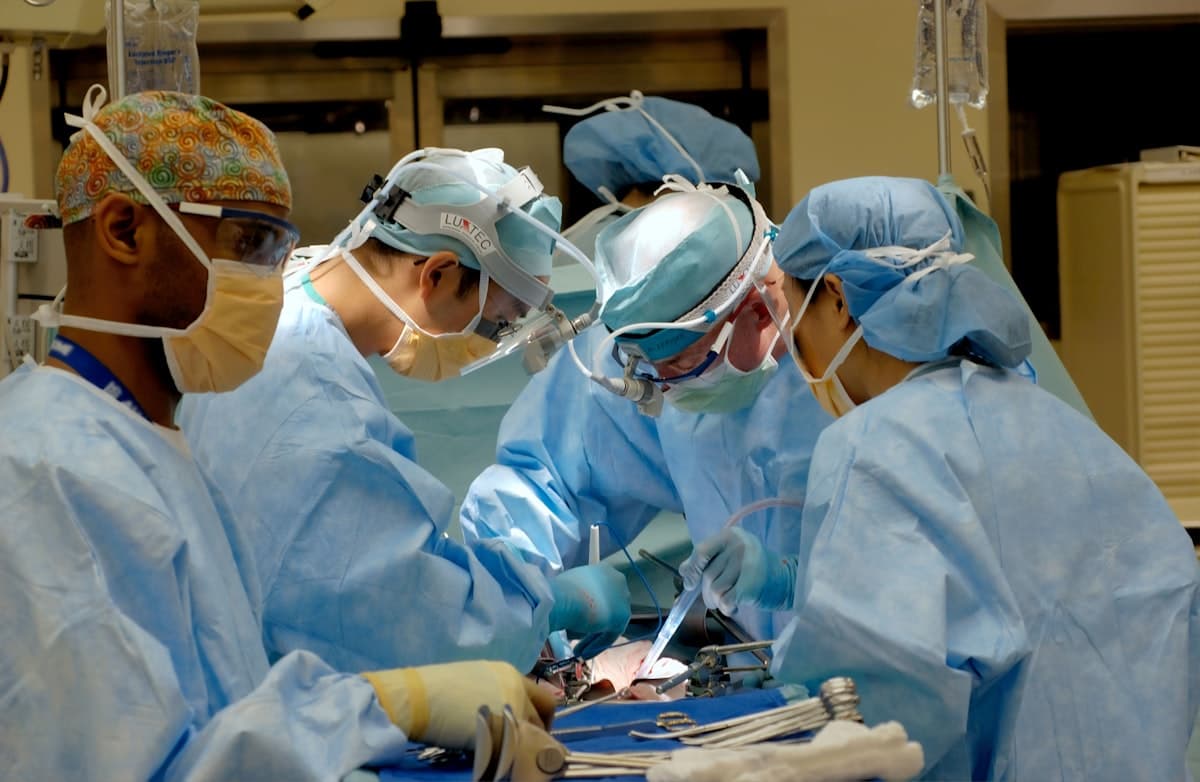
Dr. Deepak Garg (Orthopaedic Surgical Oncology - RGCI Delhi Trained) and Dr. Neha Gupta (Medical Oncology) co-lead the Bone Cancer & Sarcoma Center at Spica Healthcare. Integrating intensive multi-agent neoadjuvant chemotherapy protocols (MAP: High-Dose Methotrexate, Doxorubicin, Cisplatin for Osteosarcoma; VIDE: Vincristine, Ifosfamide, Doxorubicin, Etoposide for Ewing Sarcoma) with 3D computer-navigated limb salvage surgery and modular titanium megaprosthetic joint reconstruction, 5-year survival rates exceed 75% to 80% while saving over 95% of patients from limb amputation.
Spica Healthcare — Bone and Cancer Institute, Bathinda — is South-Western Punjab's premier super-speciality centre led by AIIMS and Tata Memorial fellowship-trained directors.
Every diagnostic MRI review, surgical staging, and operation is personally directed by chief clinical specialists — Dr. Deepak Garg (Orthopaedic Oncology & Robotics) and Dr. Neha Gupta (Medical Oncology) — guaranteeing zero junior proxies.
Sub-millimeter implant positioning and soft-tissue ligament balancing ensuring patients walk comfortably within 24 hours of total knee replacement.
South-West Punjab's only dedicated centre for modular titanium megaprosthesis, saving natural limbs and functions in 95%+ of bone cancer patients.
Full cashless coverage for Ayushman Bharat (PM-JAY), Punjab Govt Health Schemes, ECHS, and 30+ private insurance networks with on-desk approvals.
Positive-pressure HEPA filtered theatres minimizing infection rates below international benchmarks with 24/7 dedicated critical care backup.
Fellowship-trained surgical directors from AIIMS & Tata Memorial providing compassionate, world-class tertiary care in super-speciality orthopaedics and medical oncology.
Senior Consultant & Clinical Director — Medical Oncology
MBBS (BFUHS Faridkot), MD Radiation Oncology (BFUHS Faridkot), DrNB Medical Oncology (Sarvodaya Hospital, Faridabad), Precision Oncology (Harvard, USA), Ex Consultant RGCI New Delhi

Senior Consultant & Clinical Director — Orthopaedic Oncology & Robotic Joint Surgery
16+ Yrs ExpSenior Consultant & Clinical Director — Orthopaedic Oncology & Robotic Joint Surgery
MBBS (TNMC Mumbai), DNB Orthopaedics (PGI & SP Miraj), Fellowship Arthroplasty and Arthroscopy (Fortis Hospital, New Delhi), Fellowship Orthopaedic Oncology (Rajiv Gandhi Cancer Institute, New Delhi)
Free OPD screening camps, director-led masterclasses, and national oncology representations by Spica Healthcare.

National Master Course in Musculoskeletal Oncology held in Varca, Goa, organized by HBCH & RC, New Chandigarh (Tata Memorial Centre) and Sarcoma Education Foundation in academic partnership with IMSOS, featuring Dr. Deepak Garg.

Join Dr. Deepak Garg at Grover Hospital Bathinda for a comprehensive free joint and bone health camp featuring free BMD scans, arthritis staging, and expert clinical consultations.

13th Annual Conference of API Malwa Branch (MAPICON 2026) in Bathinda featuring SPICA Healthcare directors Dr. Deepak Garg and Dr. Neha Gupta delivering guest faculty lectures on limb salvage surgery in bone cancer and advances in systemic cancer treatment.

A state-level continuing medical education conference and surgical video masterclass on modern limb-salvage surgery and precision oncology for orthopaedic surgeons and postgraduates.
A dedicated community cancer awareness drive and free screening camp led by Dr. Neha Gupta focusing on early breast and cervical cancer detection for women in Malwa region.

Join Dr. Deepak Garg for an interactive live online webinar explaining modern muscle-sparing knee and hip replacement, zero-pain recoveries, and live patient question answers.
Real stories from patients who recovered through limb preservation surgery, 3D robotic joint replacements, and precision cancer care at Spica Healthcare — Grover Hospital, Bathinda.

“After completing ovarian cancer chemotherapy, genetic testing by Dr. Neha Gupta revealed a BRCA gene mutation. She placed me on oral Olaparib maintenance tablets at home. My CA-125 is completely normal at 8 U/mL and my scans show zero evidence of disease after 2 years!”
Faridkot — Verified Recovery

“An L5-S1 disc herniation caused shooting electric pain down my left leg, leaving me unable to stand straight for 2 months. Dr. Deepak Garg performed Micro-Endoscopic Discectomy through a 16mm keyhole port without any spinal fusion or screws. The shooting pain disappeared immediately upon waking up, and I was discharged the next morning!”
Bathinda — Verified Recovery

“When diagnosed with HER2-positive breast cancer, I was terrified of chemotherapy nausea and hair loss. Dr. Neha Gupta's daycare unit used a chemoport and scalp-cooling caps. I had zero vomiting, walked out each afternoon to sleep in my own bed, and completed targeted Trastuzumab with complete cancer clearance!”
Sirsa — Verified Recovery

“Severe hip avascular necrosis left me limping with agonizing groin pain. Dr. Deepak Garg performed Direct Anterior Total Hip Replacement with dual-mobility ceramic bearings without cutting any buttock muscles. I walked the very evening of surgery and drove my car at 3 weeks!”
Mansa — Verified Recovery

“Two outside hospitals told my father that my right leg had to be amputated from the hip due to distal femur osteosarcoma. Dr. Deepak Garg gave us confidence. He removed the entire bone cancer with clear margins and rebuilt my knee using a modular titanium megaprosthesis. Today I walk normally, ride my motorcycle, and am 100% cancer-free!”
Muktsar — Verified Recovery

“I was terrified of knee surgery after seeing neighbors bedridden for months. Dr. Deepak Garg's subvastus muscle-sparing technique meant zero cutting of my thigh muscle. I was walking with a walker within 6 hours of surgery and climbed stairs at 2 weeks without any knee pain!”
Bathinda — Verified Recovery
Evidence-based surgical recovery roadmaps, robotic joint protocols, and precision oncology insights written by our clinical directors.

Sports medicine & trauma guide by Dr. Deepak Garg on multi-ligament knee injuries (MLKI), Schenck classification KD-I to KD-IV, popliteal vascular evaluation, and anatomical 4K arthroscopic reconstruction (ACL/PCL/PLC).
Senior Consultant & Clinical Director — Orthopaedic Oncology & Robotic Joint Surgery

Revision hip surgery guide by Dr. Deepak Garg on massive acetabular bone loss, Paprosky classification Type I-IIIB, 3D-printed trabecular titanium modular augments, and pelvic discontinuity repair.
Senior Consultant & Clinical Director — Orthopaedic Oncology & Robotic Joint Surgery

Orthopaedic oncology guide by Dr. Deepak Garg on managing metastatic bone disease of the long bones, Mirels' scoring criteria, prophylactic intramedullary nailing, and modular tumor resection.
Senior Consultant & Clinical Director — Orthopaedic Oncology & Robotic Joint Surgery

Joint replacement guide by Dr. Deepak Garg comparing Kinematic Alignment (KA) vs. Mechanical Alignment (MA) in 3D robotic-assisted total knee arthroplasty, soft tissue balancing, and Day-1 walking outcomes.
Senior Consultant & Clinical Director — Orthopaedic Oncology & Robotic Joint Surgery

Comprehensive clinical orthopaedic oncology analysis by Dr. Deepak Garg on Giant Cell Tumor of Bone (GCTB), Campanacci staging, extended intralesional curettage, subchondral cementation, and megaprosthetic reconstruction.
Senior Consultant & Clinical Director — Orthopaedic Oncology & Robotic Joint Surgery

Orthopaedic oncology guide by Dr. Deepak Garg on extremity soft tissue sarcoma management, 3D barrier-based margin clearance, neoadjuvant IMRT protocols, and flap reconstruction.
Senior Consultant & Clinical Director — Orthopaedic Oncology & Robotic Joint Surgery